
Debunking the Law of the Jungle: What the Evidence Actually Shows
When we hear the term law of the jungle, what immediately comes to mind is an inhumane rule of life in the forest where only the strong win and are able to survive. However, is it true that this law applies in the forest?
In a recent book review, the 6th President of the Republic of Indonesia (RI), Susilo Bambang Yudhoyono (SBY), reminded politicians, “ In gaining power, the path must be correct. Do not cheat on the constitution. Do not abuse power ,” he added, “ Besides the matter of interests in gaining political power, values , principles, and good values must not be set aside .”
SBY’s message reminded me of his tweet a year before the 2019 election, which urged that the election be conducted honestly and fairly, ” Hopefully, what applies is not the ‘law of the jungle.’ The strong will definitely win and the weak will definitely lose, regardless of whether they are right or wrong. “
These two statements, which are quite different from each other, were made after he was no longer president. The first statement was more subdued because his party was in power, while the latter was more strident because his party was in opposition at the time. However, the two statements appear to be related.
The Big Indonesian Dictionary defines the law of the jungle as ” the applicable law which states that whoever wins or is strong has power .”
The Cambridge dictionary has the idiom the law of the jungle defined as “ the idea that people who care only about themselves will be most likely to succeed in a society or organization.”
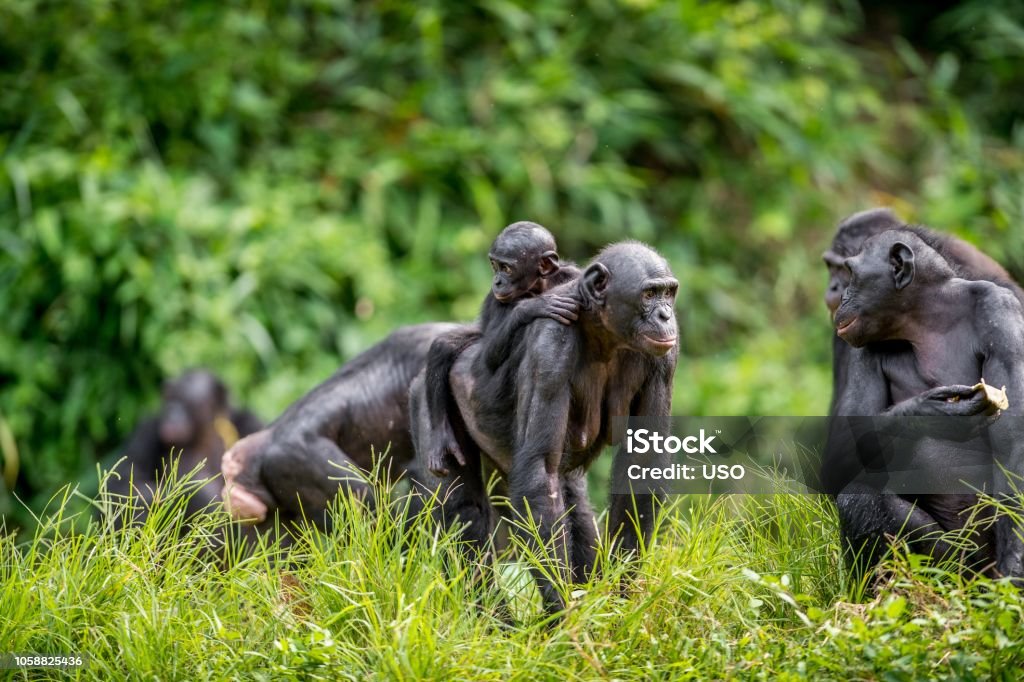
Many animals survive not by killing each other or keeping everything to themselves, but by cooperating and sharing.
Frans de Waal
However, is it true that in the jungle such a law applies, that the strong rule, and only those who care about themselves will succeed?
Yoval Noah Harari, in his book Nexus (2024), explains that we have long maintained an imagination about the law of the jungle that is not based on actual facts. The law of the jungle that we have long believed in is nothing but a myth. Harari says,
“…the law of the jungle itself is a myth. As de Waal and many other biologists have documented in numerous studies, real jungles—unlike the ones we imagine—are full of cooperation, symbiosis, and altruism demonstrated by a wide variety of animals, plants, fungi, and even bacteria.
Frans de Waal, a Dutch-American primatologist who has conducted years of research on chimpanzee behavior within their groups, stated in a short video on Big Think that the view that animals are selfish and that the strong prevail is completely wrong.
“People sometimes describe nature as a cruel world. Some biologists describe nature as a battlefield where selfish tendencies tend to win. And in terms of morality, the evolution of morality, the space is very narrow. What they mean is that all they see is competition. I win, you lose, winning is better than losing, and so on. That’s completely wrong. I’ve fought against that characterization of animal society all my life, because, like human society, animal society is built on a lot of friendship and cooperation at the same time.”
In his book, The Age of Empathy , de Waal explains that our species has both a selfish side and a social side. Unfortunately, the dominant assumption in our society is that the species survives because of selfishness. De Waal writes,
“Don’t believe anyone who says that because nature is based on the struggle for survival, we need to live like that too. Many animals survive not by killing each other or keeping everything to themselves, but by cooperating and sharing. This is especially true for pack hunters, like wolves or killer whales, but also for our closest relatives, the primates. In a study conducted in Taï National Park, Côte d’Ivoire, chimpanzees cared for group mates injured by leopards; they licked their friends’ blood, carefully cleaned their droppings, and swatted away flies that came near the wound. They protected their injured companions and slowed down to accommodate them. All of this makes perfect sense, considering that chimpanzees live in groups for a reason, just as wolves and humans are pack animals for a reason.”
De Waal’s research suggests that chimpanzee political behavior does not exhibit the law-of-the-jungle behavior we believe they exhibit. Quite the opposite is true.
In de Waal’s laboratory at Arnhem Zoo, the Netherlands, a herd of chimpanzees was initially led by a chimpanzee named Yeroen. However, within a few months the leadership was taken by Luit, a younger chimpanzee. Luit does not use coercion or violence to gain power. In over a thousand observed encounters between Yeroen and Luit, they only fought five times. Rather, it was Luit’s ability to improve the welfare of other chimpanzees that paved his way to power. He cares for and embraces other chimpanzees. He demonstrated the ability to maintain peace in the community. It is rewarded with a bow and a submissive smile, signs of chimpanzee appreciation.
According to de Waal: “ A leader receives support and respect from the group in return for maintaining order in the group. ” So, it is not the selfish chimpanzee who becomes the leader in the group, but the altruistic chimpanzee or one who prioritizes other chimpanzees.
So, if there are behaviors in our social life that tend to be selfish and prioritize power without regard for values, don’t compare them to the law of the jungle, because the behavior of animals in the jungle isn’t as cruel as we’ve always imagined. They’re not that cruel.
In fact, humans are not that cruel.
However, when in power, humans are susceptible to what social psychologist Dacher Keltner calls the paradox of power. A person is in power because people believe he possesses good human qualities (empathy, giving, and respect for others), but when power is in his hands, he tends to abuse his power ( abuse of power ). Keltner writes,
“The experience of power, without a focus on others, quickly leads to abuse of power. Instead of empathizing with others, we lose touch with what others feel and think. Instead of giving, we take, often excessively and without need. Instead of honoring others with expressions of gratitude, we belittle them with uncivilized actions.”
Keltner adds that having power feels good. Feelings of power increase dopamine spikes in the brain. Keltner writes,
“This feeling of power drives us to seek power and enjoy it when we make a difference in the world. However, be wary of overindulging in power: dopamine and the feeling of power are at the heart of addiction to certain drugs, such as cocaine, and bouts of mania, both of which lead to impulsive, unethical actions and delusional thinking. What feels so good—the ability to influence and make a difference in the world—can quickly become overwhelming.”
Stop blaming the animals in the jungle; they’re not that cruel. Stop blaming humans, too, because they’re not that cruel. It’s just that people in power, because power is pleasurable, tend to slip into cruel acts by abusing their power. Instead of prioritizing others, those in power who abuse their power prioritize themselves and their group. Instead of maintaining public order, they create chaos. Instead of treating others with respect, they degrade their dignity.
There are two types of power : hard power, which is coercive, and soft power, which is voluntary. Knowing that not all power is coercive, and that its presence is present in all social interactions in our daily lives, can prevent us from the paradox of power that leads us to abuse it.
This article is a Google-translate version of Hukum rimba hanya mitos belaka